Career Health: You Don’t Have to Burn Out to Succeed

What The Devil Wears Prada 2 Gets Right About Career Ambition, Stress, and Women’s Health
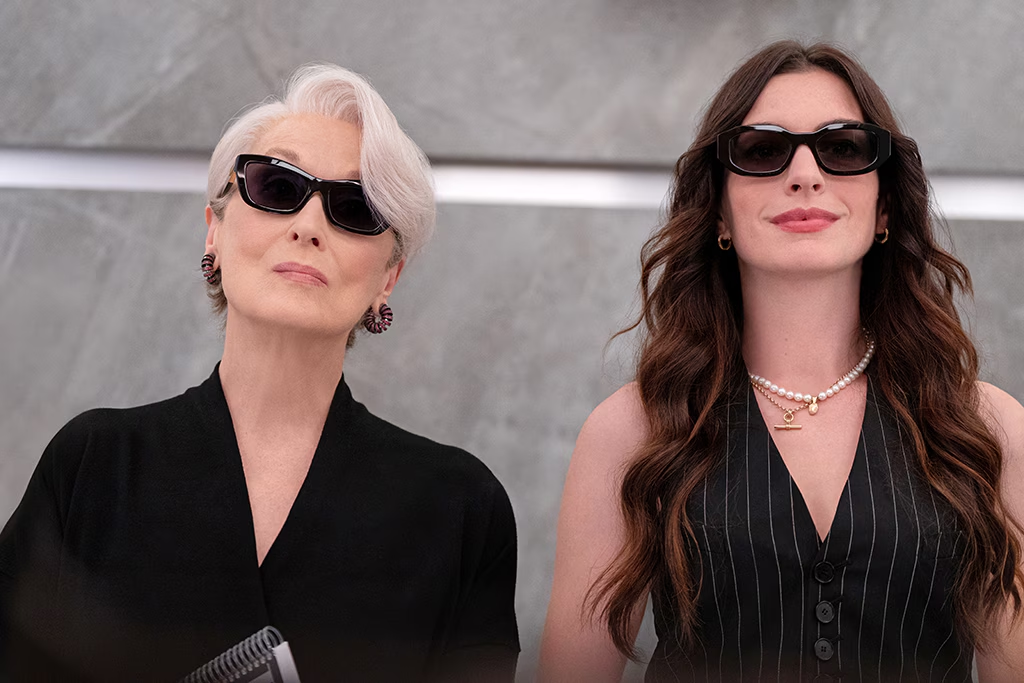
Nearly twenty years after The Devil Wears Prada first became a cultural phenomenon, the long-awaited sequel is arriving at the perfect time. As excitement builds around The Devil Wears Prada 2, many women are revisiting the iconic story with fresh eyes. Not just as a fashion fantasy, but as a reflection of modern career culture and more importantly, what burnout in women looks like.
Because while hustle culture once glorified exhaustion, today more women are asking a different question:
What if success isn’t supposed to cost us our health?
For years, women have been praised for pushing through stress, overcommitting, staying available 24/7, and sacrificing rest in the name of ambition. But growing conversations around burnout in women, stress hormones, mental health, and work-life balance are exposing something important:
Burnout is not proof that you’re successful.
And your body keeps score when stress becomes a lifestyle.
Burnout in Women and the “Successful Woman” Trap
In the original The Devil Wears Prada, Andy’s career transformation comes with a hidden cost: chronic stress, emotional exhaustion, isolation, lack of sleep, and a growing disconnect from herself.

It’s a storyline many women still recognize today.
Modern work culture often rewards:
- Overworking
- Constant availability
- Skipping meals
- Poor sleep
- Emotional suppression
- Chronic stress
- “Pushing through” exhaustion
- Always answering Slack messages or emails
Women, especially high-achieving women, are frequently conditioned to believe they must choose between career success and their physical and emotional well-being.
As Stanley Tucci’s character famously said, “Let me know when your whole life goes up in smoke. Means it’s time for a promotion.”
But that mindset has real consequences for women’s health.
How Stress Affects Women’s Health
Stress is more than emotional, it’s biological, and a significant cause of burnout in women.
When the body experiences chronic stress, it releases cortisol, often called the “stress hormone.” While cortisol is essential in short bursts, long-term elevation can disrupt nearly every system in the body. This is why chronic stress often shows up physically, not just emotionally.
Common ways chronic stress impacts women:
- Hormonal imbalances
- Fatigue and exhaustion
- Anxiety and irritability
- Sleep disruption
- Digestive issues
- Brain fog
- Weight fluctuations
- Increased inflammation
- Irregular or missed menstrual cycles
For many women, work stress becomes so normalized that they don’t realize their bodies are already signaling distress.

Stress and Hormones in Women: Why It Matters
Women’s hormones are especially sensitive to chronic stress.
When cortisol remains elevated for long periods, the body may begin prioritizing survival over reproductive and hormonal balance. This can interfere with ovulation, estrogen production, and progesterone levels.
Signs stress may be affecting your hormones:
- More painful periods
- Irregular cycles
- PMS worsening
- Missed periods
- Low energy
- Mood swings
- Difficulty sleeping
- Fertility challenges
Many women searching for answers about “how stress affects the menstrual cycle” are actually experiencing the effects of prolonged nervous system overload. The body was never designed to operate in constant fight-or-flight mode.
Also read: How Stress Affects Women Differently (And What You Can Do About It)
How High-Stress Careers Affect Women’s Health
Wanting a meaningful, successful career is not the problem. Many women are navigating demanding careers, caregiving responsibilities, financial pressure, or leadership roles that carry real weight.
The issue isn’t ambition. The issue is when stress becomes chronic and recovery never happens.
Research continues to connect chronic work stress with:
- Increased risk of anxiety and depression
- Hormonal disruption
- Cardiovascular strain
- Burnout syndrome
- Sleep disorders
- Immune dysfunction
Women in high-stress careers often become experts at functioning while depleted. But functioning and thriving are not the same thing.

Why Work-Life Balance Matters for Women’s Health
For a long time, “work-life balance” was framed as optional self-care rather than a health necessity. But balance is not weakness. Rest is just as productive as work.
In fact, sustainable success often requires:
- Adequate sleep
- Emotional regulation
- Time offline
- Supportive relationships
- Proper nutrition
- Movement and recovery
- Space to disconnect from work identity
A healthy career should not require abandoning your physical health, mental peace, or personal life to maintain it.
Also read: The Three Foundations of Women’s Health: Sleep, Nutrition & Exercise
The New Definition of Success
Part of what makes The Devil Wears Prada still resonate is that many women have lived some version of Andy’s story: proving themselves, chasing opportunity, saying yes to everything, and realizing somewhere along the way that they no longer recognize themselves.
But women today are redefining success differently.
Success can look like:
- Building a meaningful career without constant burnout
- Taking rest seriously
- Prioritizing hormonal health
- Leaving toxic work environments
- Protecting mental health
- Saying no without guilt
- Refusing to glorify exhaustion
You do not have to earn your worth through depletion.
You Don’t Have to Burn Out to Be Successful
Women are capable of leading, building, creating, innovating, and succeeding in extraordinary ways. But chronic stress should not be the admission price for success.
As The Devil Wears Prada 2 re-enters the cultural conversation, maybe it also gives us an opportunity to rethink the version of success women have been sold for decades. One where burnout was expected, exhaustion was glamorized, and overworking was mistaken for purpose.
Women deserve careers that challenge them without destroying them. Because true success should include your health, too.
Read next: 10 Easy Ways to Cope with Stress
This content is for educational purposes only and is not a substitute for medical or mental health advice. If chronic stress or burnout is affecting your daily life, consider speaking with a qualified healthcare provider or mental health professional.